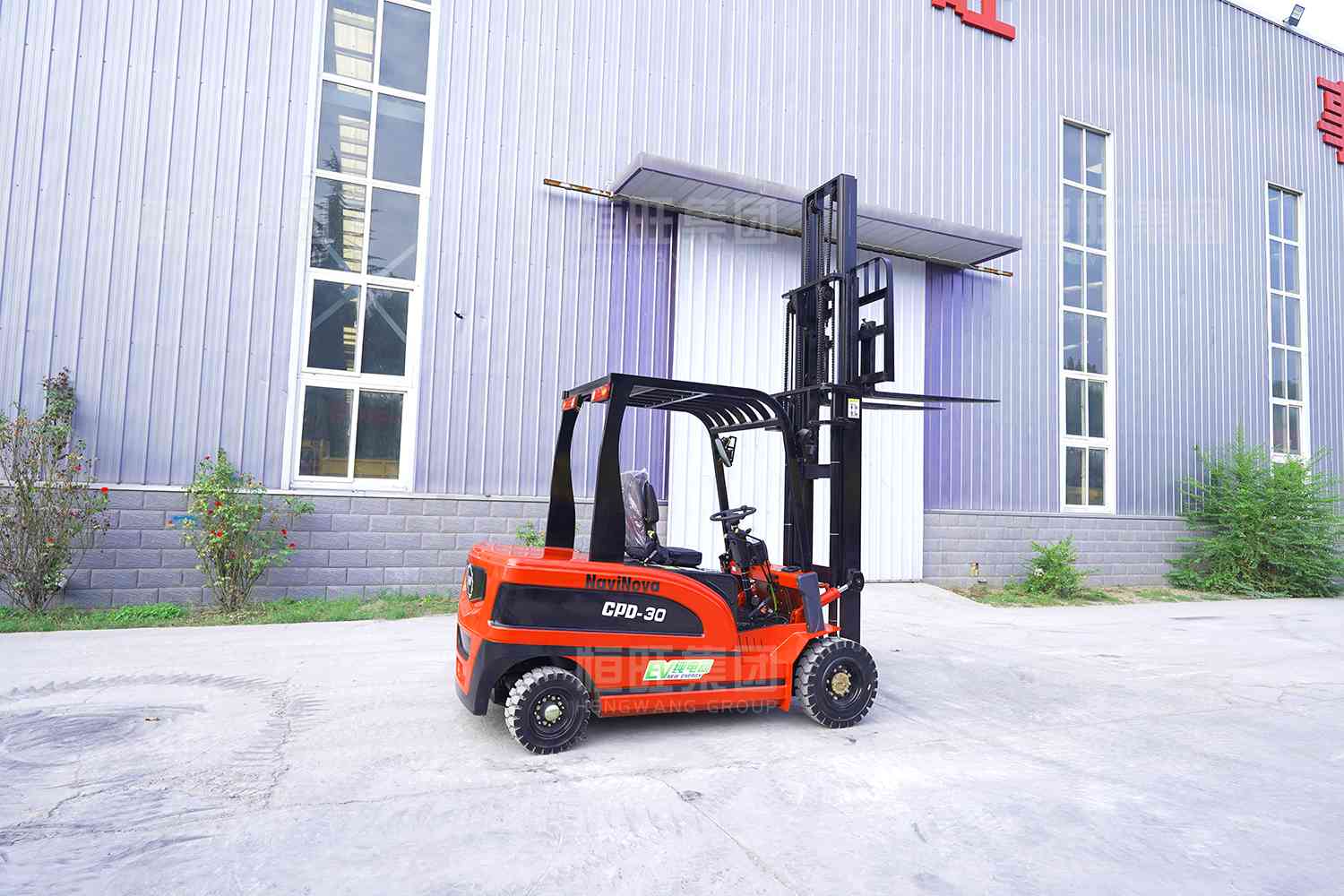
1. Battery Self-Discharge Phenomenon
When fully charged electric forklifts sit idle for extended periods, batteries continue discharging due to internal chemical reactions (known as "phantom drain"). For example, stored for a week, the battery may lose 10%-20% of its charge, and rapid acceleration can deplete an additional 1-2 power bars. Solution: Avoid prolonged parking; recharge every 3 days and maintain charge levels between 50%-80%.
2. High Load Accelerates Power Consumption
Electric forklifts operating at full capacity or climbing slopes require higher motor output, increasing current intensity and power consumption. Data shows that fully loaded operations consume 30%-50% more power than empty runs. Optimization Tip: Distribute cargo weight reasonably, avoid overloading (≤110% of rated capacity), and maintain steady driving speeds.
3. Low Temperatures Reduce Storage Capacity
Below 0°C, battery electrolyte activity declines, with actual capacity potentially dropping to 70%-80% of the rated value. Even when the indicator shows "fully charged," runtime in cold weather is significantly shorter than in normal conditions. Countermeasure: In cold regions, use low-temperature batteries (rated for -20°C), and preheat batteries to above 15°C before operation.
4. Aging Circuits Increase Resistance
Over time, electric forklift circuits may develop oxidation in wiring or loose connectors, raising internal resistance. This generates excess heat during current flow, leading to power loss. Maintenance Focus: Inspect the circuit system every 6 months, clean terminal oxidization, and replace aging wires.
5. Faulty Battery Cells Drag Down Performance
If one battery cell develops abnormally high internal resistance (e.g., sulfation or plate corrosion), it weakens the entire battery pack, causing false full-charge readings and rapid depletion. Diagnosis Method: Use a multimeter to measure individual cell voltages; replace any cell with a voltage difference >0.2V.
Best Practices to Extend Battery Life
Charging Protocol: Avoid overcharging (>12 hours) or deep discharging (<20% capacity); opt for smart chargers.
Environmental Management: After operating in dusty workshops, clean battery vents with compressed air promptly.
Performance Monitoring: Install a Battery Management System (BMS) to track State of Charge (SOC) and State of Health (SOH) in real time.
By addressing usage habits and conducting regular maintenance, risks of abnormal power drain in electric forklifts can be minimized, ensuring sustained equipment efficiency.